

When the United States and Israel at last make an attempt to force a regime change in Iran, it must be said to be high time. And the moment could scarcely have been more fitting:
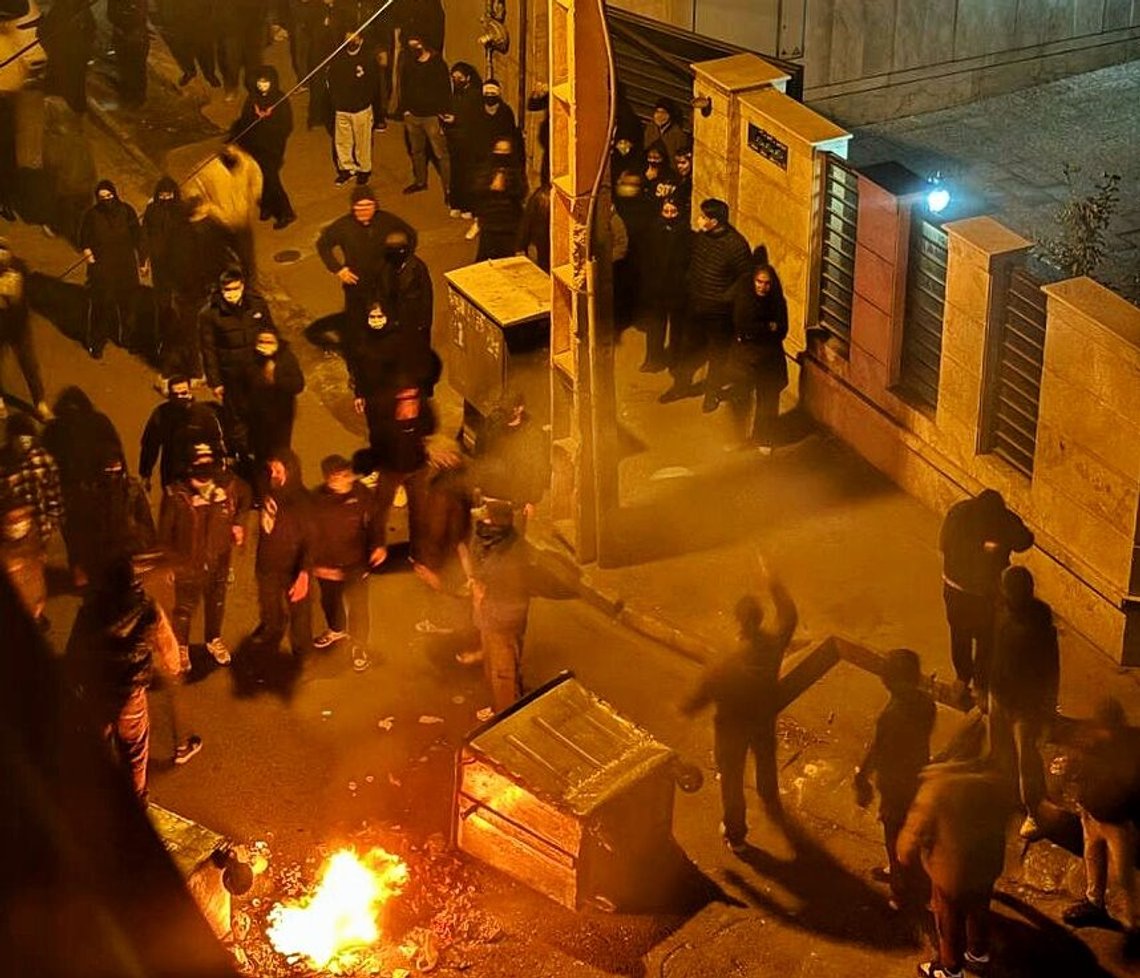
The ayatollah regime is weaker than at any time since the revolution in 1979, and it has recently committed atrocious abuses against its own population, which appears more ready than ever during these almost fifty years to rid itself of the Islamist executioners.
Everything pointed in the direction of a military attack, with the United States’ massive military build-up in the region over the past weeks, although it was conceivable that a Trump who has unpredictability as his method would use the forces as part of efforts to achieve a deal with the ayatollahs.
Israel’s Prime Minister Benjamin Netanyahu had moreover on more than one occasion during the past couple of years suggested that the Iranian regime did not have long left, and that the Iranians could thus be promised a better future.
Trump would quite simply have lost credibility both on his own behalf and on that of the United States by not seizing the opportunity to give the country and the entire region a better future, not least because he had promised that help was on the way. It was now or never. There are less than three years left of his mandate, and eight months until the midterm elections.
If and when the ayatollah regime falls, it is decidedly overdue. From Tehran there have been cries of “Death to Israel!” and “Death to the United States!”, respectively “the little and the great Satan”, throughout all these years.
Death is indeed almost the only thing the regime has delivered. It has kept the population in constant terror by executing a shockingly high number of people; there is talk of three to five executions on average per day over a long period.
That death was all they could offer ought to have been obvious already when one saw the hateful marches after the revolution, which yours truly observed as a ten-year-old on television. “They’re all mad, every last one of them,” as the present writer’s late grandfather put it when he saw the hateful looks, the shaking fists and the hordes of women wrapped in those accursed long black garments.
We do not know what will follow the theocracy, and it will hardly be any idyll, but there is good reason to believe that Tehran will not remain the principal sponsor of terror, and that the country will not constitute any military threat to Europe, even if terror at home with us may become one of the regime’s death throes.
This ought to be a source of joy for us, but instead we see that Minister of Foreign Affairs Espen Barth Eide is concerned. What, in fact, is the matter with that man?
Unfortunately, we now have so many sympathisers of the mullahs’ proxies on European soil, whether native-born or from the Middle East, and these, together with our own traitors in power, have succeeded in influencing opinion to Israel’s disfavour to such an extent that one finds oneself thinking that large parts of Western Europe have in reality become part of the Middle East.
Thus the regime the Iranians struggle with today may become the one our descendants struggle with tomorrow.
In the meantime, we may today become more optimistic on behalf of the original Middle East. Iran has great resources and can fundamentally alter the situation in the region if it does not remain an Islamist theocracy.


