
 Berge Borg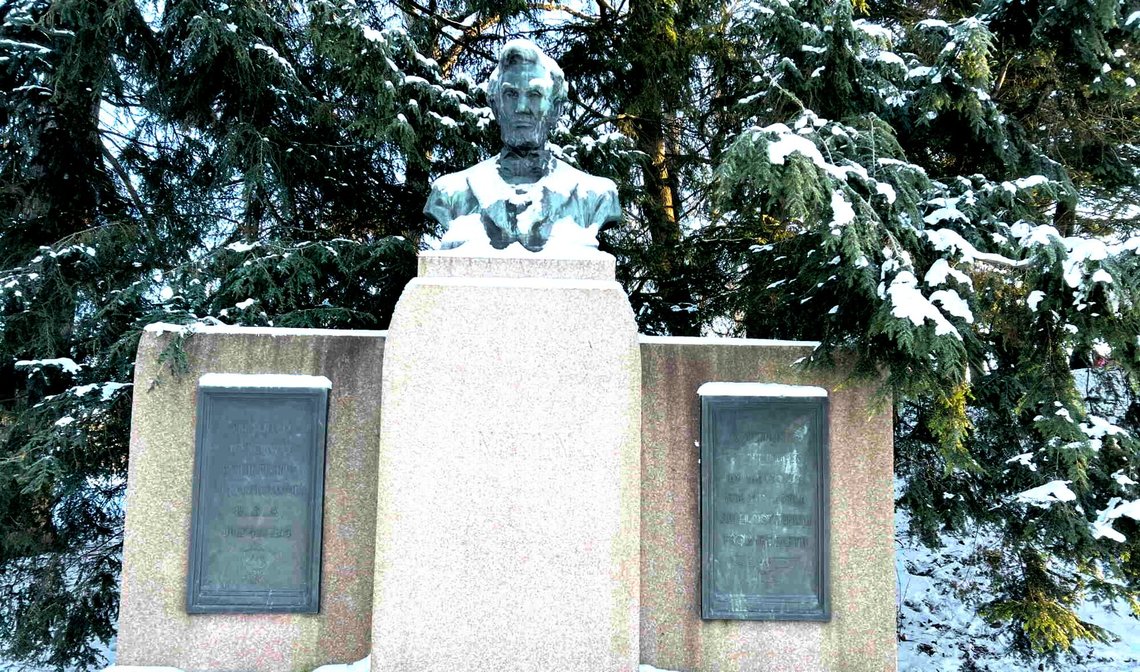
The Epstein-files have generated a major public debate about the lack of integrity among leading politicians and other members of the societal elite, and about whether one can have confidence in our political leaders after such revelations. Weak integrity is undoubtedly highly damaging to a relationship of trust, but even more damaging is a lack of loyalty to the people from whom one has received one’s positions of trust.
In order to succeed, a professional politician must be nominated to as secure a place as possible on his or her party’s parliamentary election list. That requires painstaking network-building within the party, and above all vis-à-vis the party leadership whose confidence must be won. Ordinary party members have limited influence. Success is naturally repaid with loyalty to the party leadership.
There are several problems with this, but the fundamental one is that loyalty to the voters and the people recedes into the background. The fact that Members of the Storting to an alarming degree lack work experience, particularly within the party leadership, is moreover a logical consequence of this system.
In Frogner Park in Oslo stands a fine bust of Abraham Lincoln, given as a gift to Norway in 1914 by the people of North Dakota. On the plinth stands the conclusion of the Gettysburg Address delivered by Lincoln in 1863:
GOVERNMENT OF THE PEOPLE,
BY THE PEOPLE,
FOR THE PEOPLE,
SHALL NOT PERISH FROM THE EARTH
In this country, this ideal of governance has been emphatically abandoned. Politicians no longer arise from the people, but from the class of professional politicians, often through political family dynasties. And they do not govern for the people, for their loyalty is not to the people but to one another (the network), and especially to the party leadership.
Anyone who with an open mind and a critical eye takes a closer look at particularly our two so-called governing parties, the Labour Party (Arbeiderpartiet) and the Conservative Party (Høyre), realises this and how lamentable the result is when loyalty to the party network and party leadership is the foremost characteristic of those who slither upwards in the hierarchy. Backbone appears to be almost disqualifying. Both parties stand without genuine leaders or leadership candidates, only colourless and exceedingly dull, smooth, ideologically unprincipled yet politically correct power-seekers.
In addition to these politicians lacking loyalty to the people, they have moreover admitted large groups of people from foreign parts of the world who likewise are not loyal, but on the contrary directly disloyal towards the Norwegian people. Islam explicitly prescribes disloyalty towards the unbelievers. “Multiculturalism you shall have, whether you want it or not,” said former Foreign Minister Anniken Huitfeldt. It is difficult to be more disloyal than that, yet this professional politician was incomprehensibly appointed ambassador to tend our relationship with our most important ally.
Huitfeldt was succeeded by Espen Barth Eide as Foreign Minister, a man whom the United States Ambassador to Norway already in 2008 described as unreliable and disloyal towards Norway.
Then Foreign Minister Jonas Gahr Støre had the backbone of a worm when he sacrificed the people’s freedom of expression in order to appease loud protests from Muslim masses during the cartoon controversy in 2006. He was supported by the then Prime Minister Jens Stoltenberg.
Various “humanitarian” conventions to which our politicians have bound us have their loyalty directed towards foreigners, and they invite cynical exploitation of our country. A glaring example is this news item:
“In new guidelines, the EU Asylum Agency states that persons with links to the Islamic State in Syria have a ‘well-founded fear of persecution’ – and may therefore have a right to international protection.”
Fortunately, Norway is not an EU member, although the Storting representatives of the “governing parties” are strongly eager for this, now possibly without going via a referendum. The example nonetheless illustrates well how fundamentally disloyal the law is in the field of immigration. To introduce such regulations into one’s country is undoubtedly so disloyal that it must be regarded as treason, even though legally it is considered an expression of the very highest standard in safeguarding human rights.
The example also recalls the uproar that arose when the then Minister of Justice Sylvi Listhaug in 2018 wrote: “The Labour Party believes terrorists’ rights are more important than national security.” Such an observation of catastrophically misplaced loyalty the Labour Party could not tolerate, so they deployed their spin doctors, who managed to link this to 22 July, and with the help of the media they got away with it. The disloyal then Prime Minister Erna Solberg left Listhaug to stand alone in the storm and sacrificed her as a minister.
A rule of thumb may be that the louder our politicians shout about trust and the Norwegian trust-based society, the less they understand that trust must be purchased with loyalty. Integrity is the other prerequisite, but loyalty is the most important, though very rarely addressed, with Listhaug in 2018 as an honourable exception. Politicians who do not have their primary loyalty to the people do not deserve the people’s trust, however much they appeal for it. On the contrary, they deserve the people’s mistrust.


