

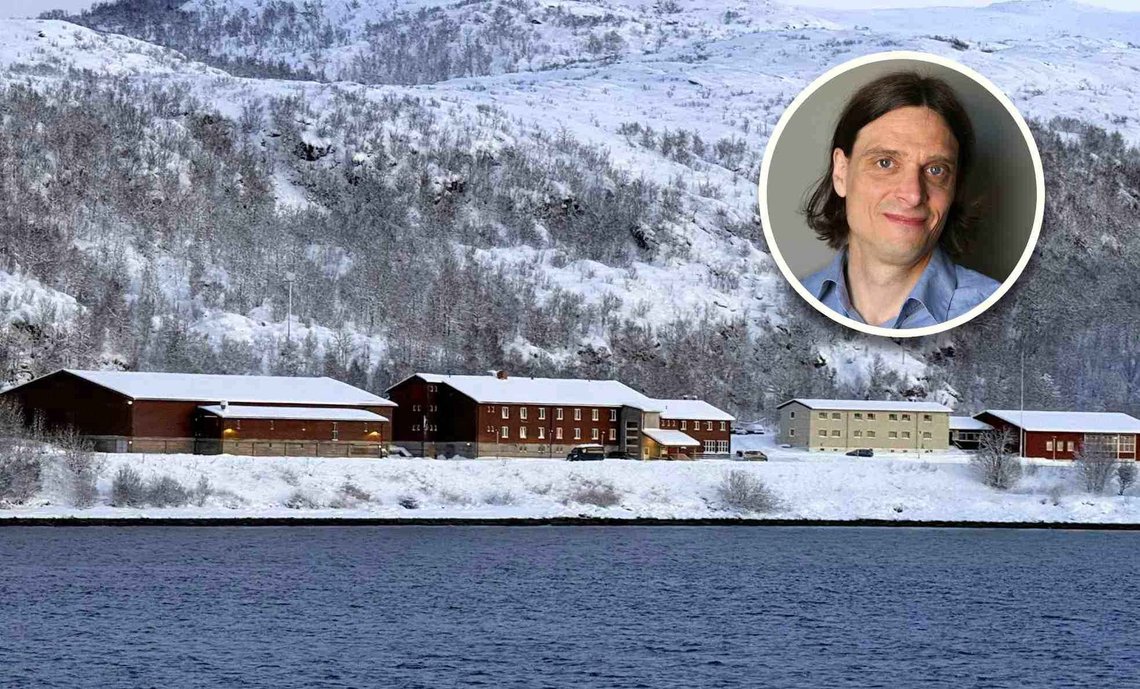
– We no longer want to participate in this experiment, say the neighbours. At the decommissioned Rødbergodden fort in Troms, asylum seekers deemed too dangerous for other reception centres are housed and allowed to roam freely, even if they may have mental disorders or criminal convictions.
It is not often that the police come all the way out to Rødberghamn, at the end of the road on the northern part of Lenvikhalvøya in Senja municipality.
Here live ten permanent residents.
Over the past year and a bit, however, there has been a great deal of blue lights here, from both police and ambulance. The villagers understand that serious things are happening at the asylum reception centre in the decommissioned coastal artillery fort, and they feel unsafe.
The reception centre at Rødbergodden is a so-called særbol – special accommodation and care solution – for eight asylum seekers.
They are too dangerous to be housed in other reception centres. Some are mentally ill. “Asylum seekers with special needs” is the terminology used by the UDI. They are placed here after first having been threatening and causing disturbances in an ordinary reception centre.
30 staff members must supervise them around the clock.
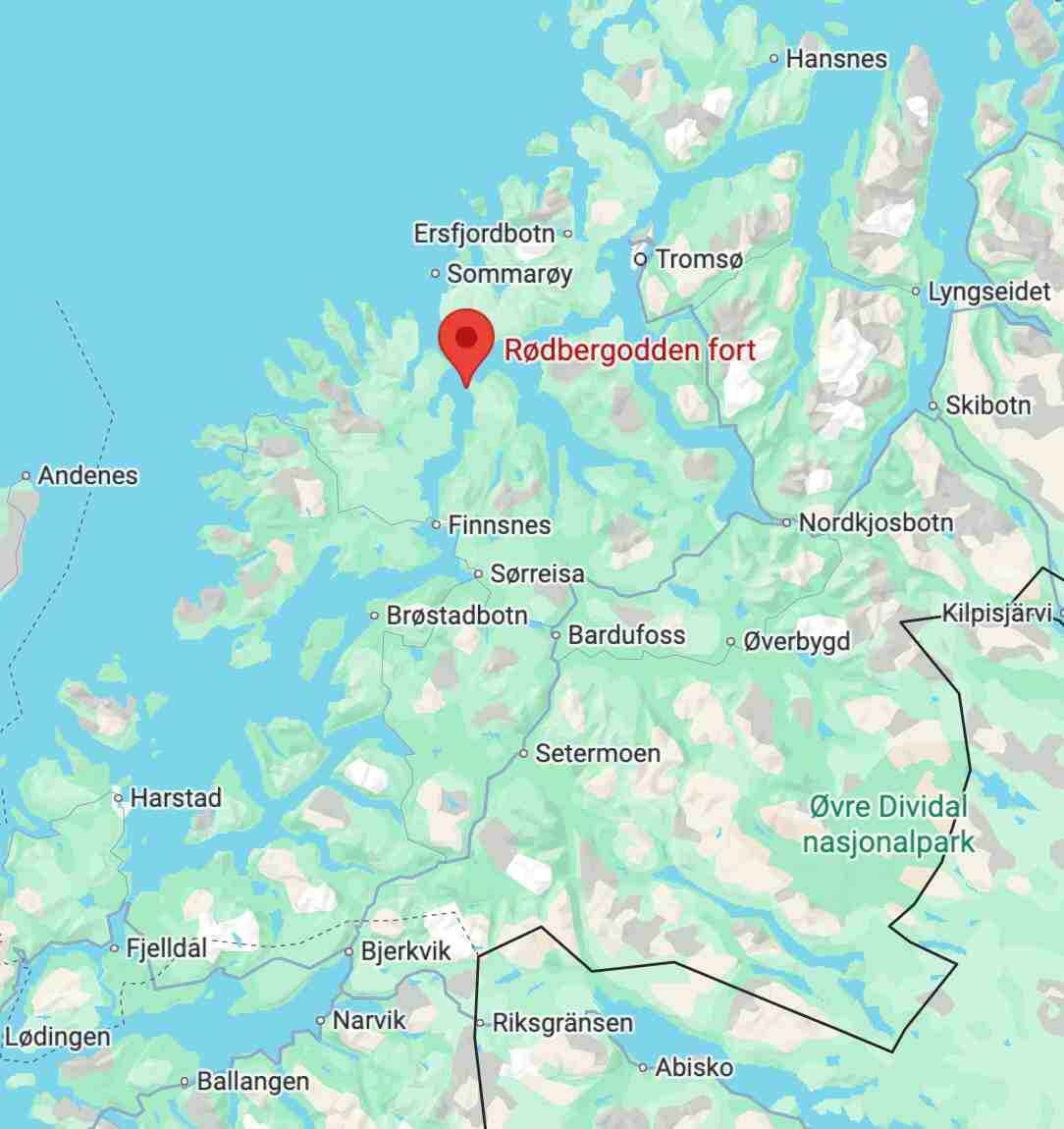 The reception centre in the decommissioned coastal artillery fort at Rødbergodden is located in Senja municipality in Troms. The nearest police station is in Finnsnes, about half an hour’s drive away.
Nevertheless, the residents of Rødbergodden fort move freely outdoors. Home and cabin owners in the area report burglaries, vandalism, police call-outs and unpleasant confrontations.
Many small incidents have created uncertainty:
- Someone standing in the garage
- Someone breaking into a shed
- Someone stealing bread from the freezer
- Damaging letterboxes
- Getting into a hot tub
- Standing bloody in the garden and shouting “Police! Police!”
– We are not against immigration, and we are not against them being here, but they cannot move freely any longer, that won’t do, says Stein-Gunnar Hansen Bondevik, who grew up in the village.
Troms Folkeblad has written several articles about the residents’ revolt against the UDI and Tian Helse, the private company in Harstad that operates the facility.
The journalist asks regional director Njård Gudbrandsen of the UDI what happens if a resident has been a child soldier. Does the reception centre receive that information?
– No, that would not be information we routinely pass on to the reception centre. There is a great deal of information in the asylum case, which is relevant to whether the person is granted residence, that the reception centre does not receive.
Bloody man in the garden
Jan Hugo Seljenes recounts that he and his wife have had asylum seekers in their garden several times.
– We had a visit from a fellow who was bloody and beaten. He came into our garden and had terribly bad language, so the only thing he managed to say was “police, police”. We called the police, as he requested, and eventually some came and collected him, he says.
The same man returned on another occasion.
– My wife was sitting at the kitchen window at home. Suddenly the same man was standing on the veranda with his nose pressed against the kitchen window staring straight at her. It was very unpleasant. Then I called out to Rødbergodden, but the woman who answered the phone asked us to call the police instead, says Seljenes.
The police have to drive at least half an hour from Finnsnes. Sometimes they are called out from Midt-Troms, which can take from one to one and a half hours.
The neighbours’ impression is that when they call and complain to Tian Helse in Harstad, the message is that they do not have the authority to do anything.
– Cannot deny them
– This is a voluntary accommodation offer. Neither the UDI nor Tian Helse can prevent the residents from going out, says regional director Gudbrandsen. It is unlawful to use coercive measures.
The UDI is obliged to offer a place to stay, but even dangerous asylum seekers without legal residence are not obliged to accept the offer.
They can find somewhere else to live themselves.
Nine neighbours in Rødberghamn have joined forces to write a reader’s letter, in which they raise the alarm and describe themselves as “guinea pigs”. The Kampen murder provided a gruesome backdrop:
We do not wish to contribute to the disappearance of the reception centre. But we must be able to feel safe in our homes and cabins, and then other solutions must be put in place. The least we can expect is that the reception centre’s staff accompany residents who wish to go out. We have recently had a tragic outcome of lack of control at an institution in Kampen in Oslo. With this we wish to contribute to preventing something similar from happening in our village.
The conditions at the reception centre are so tough that women are not allowed to work alone at the facility, the neighbours have been informed.
Threatened with razor blade
A violent 22-year-old from Syria who has lived at the reception centre is now charged with a long series of serious threats, violence and vandalism at two asylum reception centres and against police officers.
Among much else, he threatened staff with a knife and said he would “cut and stab” them. He has also repeatedly made death threats against staff and at one point displayed a razor blade and threatened to harm both them and himself. He also threatened to “cut the head off” another asylum seeker and to “take” staff when they were leaving work and were alone outside.
At Rødbergodden he has otherwise smashed windows, walls, car mirrors and overturned furniture. According to the indictment, he has also “over a prolonged period kicked doors, shouted and screamed at staff and residents, and behaved threateningly.”
– Not everyone you will want to meet
Professor of political science and Latin America expert, Benedicte Bull, is one of the neighbours who has become involved in the case. She points out that communication from Tian Helse has changed over time.
 Benedicte Bull. (Photo: Private)
– Before we were told that they were not dangerous, perhaps more a danger to themselves, and that there was not much point in trying to talk to them, because they were so introverted. Now they are sending staff signals that this is a dangerous place, she tells Folkebladet.
She does not wish to elaborate to Document and says she does not want to contribute to further coverage of the case now.
When she and another female neighbour last year wanted to walk along the shore rocks past the institution, staff came and tried to stop them.
– You are walking at your own risk, you know what kind of institution this is, they said, Torunn Bødtker tells Folkebladet.
– We were going to the lighthouse to take pictures. They said that “not everyone you will want to meet”, she says, adding that if the warnings are ignored, one receives a stern message not to speak to any of the asylum seekers.
Needed police competence
In the summer of 2025, Tian Helse concludes that something must be done to increase security. They submit an application to the UDI to change the competence requirement for employment at Rødbergodden, from health education to police education.
– Since the tender submission in 2021, the resident group at the reception centre has shown significant changes. Tian Helse has experienced an increase in complexity and challenging behaviour, which has resulted in a real and growing need for a different type of experience and security competence than what was previously considered sufficient, states the heavily redacted letter that Document has obtained from the UDI.
There follows a paragraph on the documented effect of having police-trained personnel at the reception centre, but the text itself is redacted by the UDI. The same applies to the paragraphs further down.
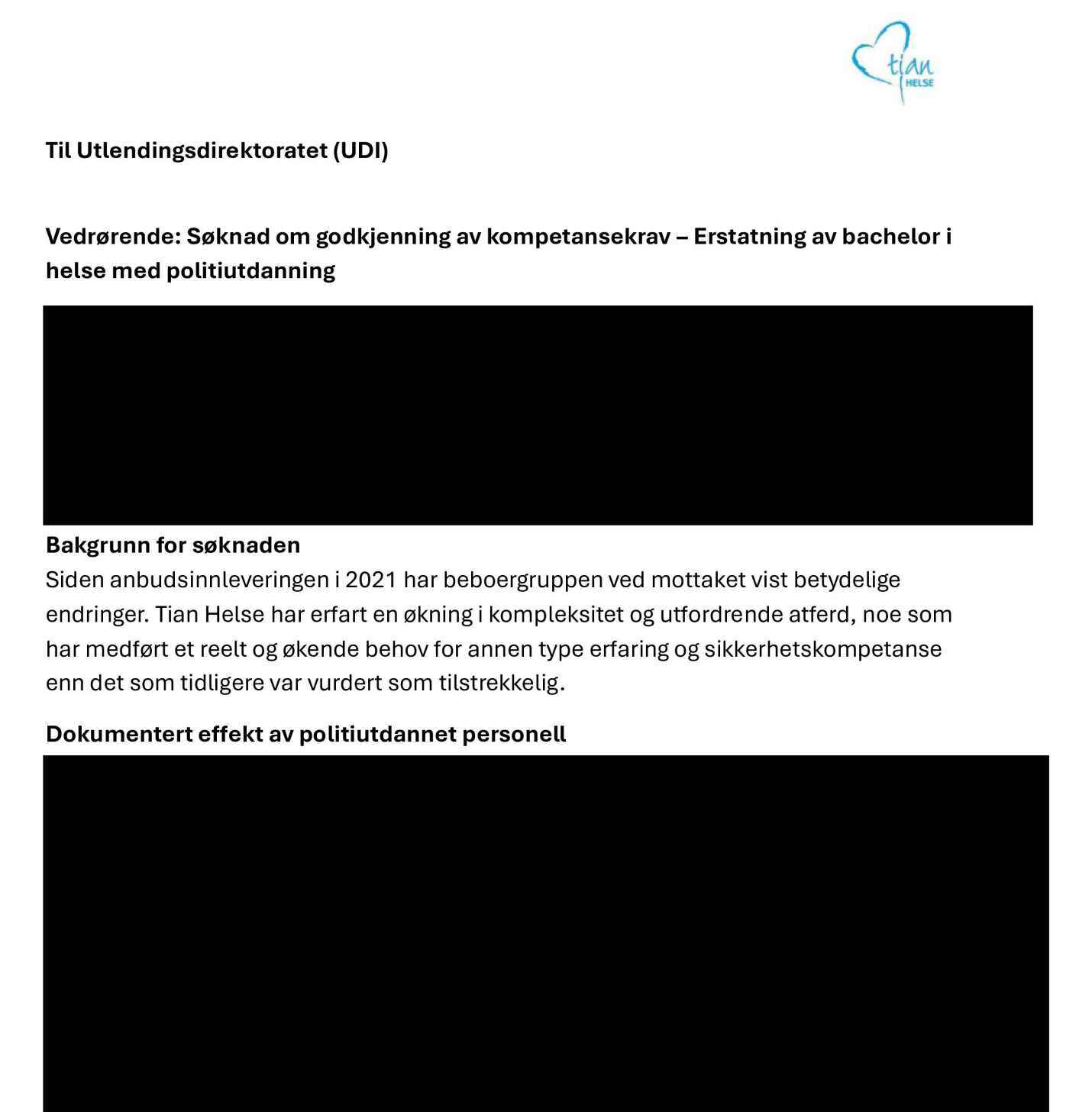 Excerpt from letter sent from Tian Helse to the UDI in July 2025.
Lacks street lighting
The coastal artillery fort at Rødbergodden was decommissioned by the Norwegian Armed Forces in 1997, only three years after it had been renovated for 50 million kroner. It was bought by a private company for 3.6 million kroner, far below valuation.
In 2016 the Harstad-based Tian group bought the place for around nine million kroner. Since 2021 Tian has operated an asylum reception centre for particularly aggressive and dangerous immigrants at the site – an activity which on their own website they describe as “health and care”.
The barracks lie isolated, a little north of the village of Rødbergshamn, where the invasion forces’ abandoned gun battery from 1941 is located.
There is no street lighting, so in winter it is pitch dark.
– You need a head torch to see anything at all when you go out, says Stein-Gunnar Hansen Bondevik.
– Safer in Mexico
– These people are placed here because they have been assessed as posing a danger to their surroundings, and then no one supervises them. We have lived fine with it because we thought there was control, but now people sit indoors with locked doors, out of fear, says Bondevik.
Bjørn Arne Jenssen, another neighbour, concurs:
– A year ago the doors were open, but now they are locked.
A couple interviewed usually live in Mexico City, with 22 million inhabitants. They now feel safer there than they do at home in the man’s childhood home.
24 reports have been filed in the first half of 2025. Threats, vandalism, reckless behaviour, bodily harm and burglaries.
A young woman had a man get into her car who forced her to drive him to Finnsnes, half an hour away. A man went from house to house at night, trying doors and entering garages and outbuildings.
– If the goal is to get those who live here back into society, how are they then to get practice in living in a society – out here? These are people who come from big cities, it must be like a punishment to come here where there is hardly a person to be seen. They could even become mentally damaged just from that, says Roger Maukeng to Troms Folkeblad.
Police station chief Frank Magne Sletten admits that it is not the best-behaved children who are sent here.
The Tian group comprises 18 companies. The operating company Tian Helse AS had turnover of just over 108 million kroner and an operating profit after tax of 10.13 million. Tian Eiendom Rødbergodden AS had turnover of just under 2.2 million kroner in 2024.
Media scrutiny prompted the UDI and the owners of the reception centre to arrange a public meeting.
The UDI also carried out inspections and found a number of deviations. The reception management said it had been a “slip-up”. Also in January 2025 such an inspection revealed that the institution lacked management.
- Still no information plan for residents created, despite previous orders.
- Ordered financial report not submitted to the UDI.
- Data processor agreement breached.
- The UDI not informed about new system suppliers given access to confidential information.
- Ordered conversations with residents staying unlawfully in Norway not held.
- The “return responsible” had been on sick leave for several months, without anyone taking over responsibility.
The UDI’s regulations elaborate that such return conversations “shall contribute to residents without legal residence returning as quickly as possible”, and that “the residents become reality-oriented [about] their own situation”.
In other supervisory reports, lack of staffing, lack of training plans and lack of reporting of police reports following serious incidents at the reception centre are pointed out.
– Full freedom of movement
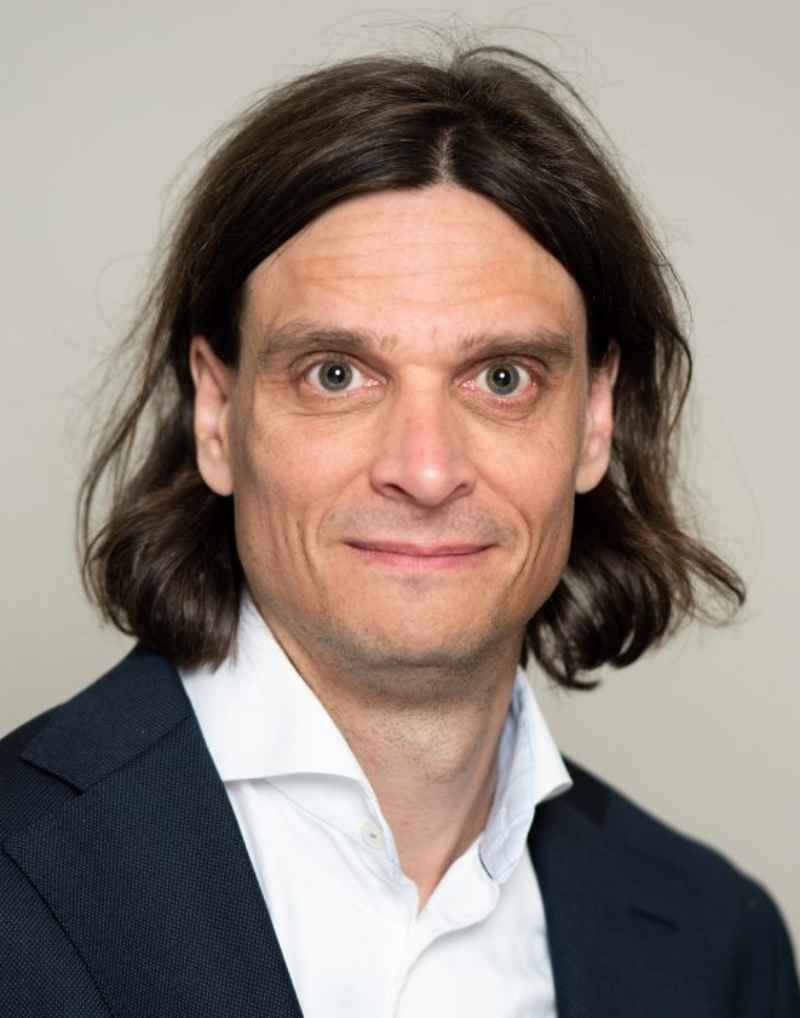 Njård Gudbrandsen at the UDI is responsible for the special accommodation and care solutions for dangerous asylum seekers, including the reception centre at Rødbergodden. (Photo: Nora Lie, UDI)
– Those who live at the reception centre are not there because they have done anything criminal, this is not a prison, says regional director Gudbrandsen at the UDI. He believes that “good milieu-therapeutic measures” are a better solution than sanctions to get them to behave.
He believes Rødbergodden’s “location” balances the consideration of safety for the surroundings and local community, as there are no kindergartens or schools nearby. He repeatedly encourages the local population to continue calling the reception centre, despite them telling the newspaper that they have largely been rebuffed.
Municipal director in Senja municipality, Stine Jakobsson Strømsø, has no other solution than to ask the municipality to ensure that the UDI “is aware of the challenges”, so that they can have a “good and constructive dialogue” with Tian Helse.


