

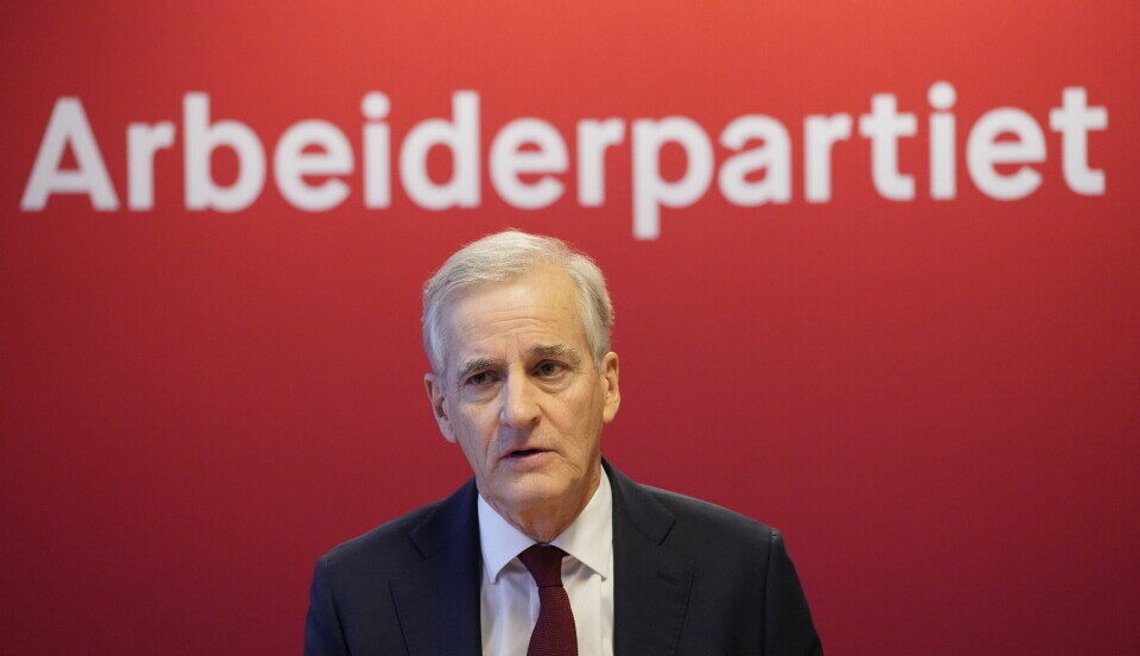


Prime Minister Jonas Gahr Støre faces strong headwinds for his shifting explanations concerning the missing documents from the Oslo Process.
Middle East researcher Hilde Henriksen Waage maintains that Støre’s attempt to explain away his own role in 2006 does not hold together.
The matter concerning the secret documents of the married couple Terje Rød-Larsen and Mona Juul has flared up again in the wake of the Epstein revelations. The core of the case is whether the couple privatised Norwegian foreign policy by retaining sensitive documents from the peace negotiations in the 1990s.
When Professor Hilde Henriksen Waage researched the process in 2001, she discovered that the archives had been emptied for a period of nine months.
Støre’s U-turn
In 2006, when Jonas Gahr Støre was Minister of Foreign Affairs, the Ministry of Foreign Affairs (Utenriksdepartementet, UD) declared the matter closed. Støre’s press spokesperson stated at the time that there were no documents in Rød-Larsen’s possession that were missing from the UD’s archives.
Now, 20 years later, Støre is attempting to rewrite history. To VG he says that the statement in 2006 in fact concerned the documents being transferred to the National Archives (Riksarkivet), and not necessarily to the UD.
This explanation prompts a strong reaction from Professor Waage.
– Either he did not understand it, or he is trying to wriggle out of it. The cards are being completely mixed here when Støre tries to get away with claiming that he really meant that the documents were to be in the National Archives, Waage tells the newspaper.
The regulations expose Støre
Waage points out that Støre’s new version conflicts with elementary archival practice and ordinary security regulations. Confidential UD documents are to be archived in the Ministry, not sent directly to the National Archives as a private archive (privatarkiv). In 2006, many of these papers would still have been classified.
A letter from the National Archivist (Riksarkivaren) to Terje Rød-Larsen in 2006, to which VG has gained access, also undermines Støre’s explanation. It states that documents belonging in the UD’s archives are the responsibility of the UD to follow up.
– It is not Rød-Larsen’s diary notes that are being requested here. It is the UD’s documents, which belong to the UD. Therefore, Støre’s argumentation is completely wrong, Waage states.
Misremembered his own role
Støre’s credibility is further weakened by the fact that he initially claimed to VG that he did not recall having been personally involved in the matter in 2006. His then press spokesperson, Anne Lene Dale Sandsten, corrects this and tells NRK that the matter was examined and discussed precisely at the request of the Minister of Foreign Affairs.
While Støre now attempts to row himself away from responsibility, the fact remains: Important documents from one of Norway’s most high-profile foreign policy engagements are still unaccounted for, and the political leadership that was to have put matters in order instead chose to close the case.


