

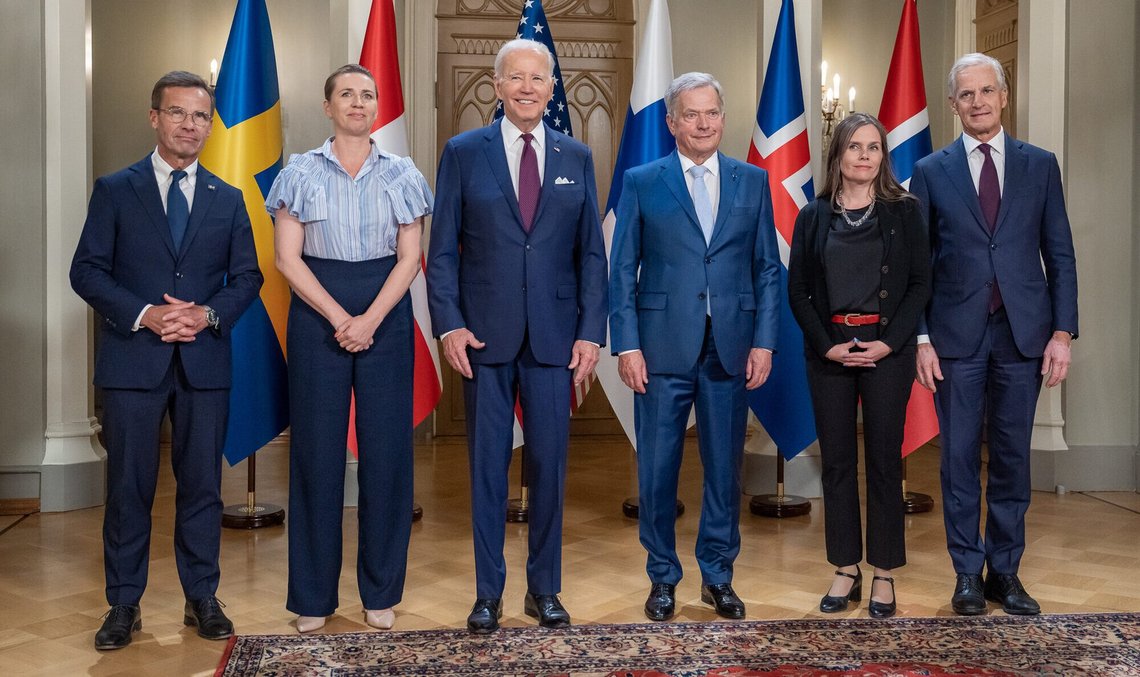


Jonas Gahr Støre pushes his way forward and throws out explanations and excuses for the fact that some of his closest associates have been caught up in the Epstein case. He quite simply throws them under the bus.
Gro’s assertion that it is typically Norwegian to be good, Støre uses in Thorbjørn Jagland’s favour.
Epstein revelations hang like a shadow over the Norwegian delegation at the security conference in Munich. – Not a good story about Norway, acknowledges Støre.
Two well-known Norwegians – former Secretary General of the Council of Europe, Thorbjørn Jagland, and top diplomat Mona Juul – have been charged with gross corruption following the revelations.
– Clearly, these are not good stories about Norway, acknowledges Prime Minister Jonas Gahr Støre (Ap) to the Norwegian press in Munich.
At the same time, he warns against interpreting the case as something typically Norwegian.
– These are individuals, some of whom have been placed under investigation by Økokrim. Now that case must run its course. And we who are here shall answer properly for what Norway believes, and what Norway stands for, he says. It is not Norway we have seen in these contexts, it is individuals.
Støre will guaranteedly change his explanation along the way.
Stoltenberg joins in. One senses that the two are ashamed of their party colleague.
Finance Minister Jens Stoltenberg, who is also in Munich, believes that what has emerged is serious.
– Very serious circumstances have come to light, and this concerns not least those who are victims of human trafficking and abuse. And it is good that women come forward and speak about it, he says to NRK.
– Now it is important that all those processes proceed thoroughly, so that everything is clarified and so that those who are responsible are held to account, he continues.
Is it so certain that it is only the three or four who are in the line of fire? Might there not also be more? Støre and Stoltenberg are now setting a standard by which they themselves will be measured.
Støre keeps repeating that “the world stands in the most serious security policy situation since the Second World War.” Such things are called hype. Or scaremongering, in plain Norwegian.
Who is it that has made the world unsafe? Trump.
For Støre, Ukraine sits at the top of the list of priorities; not Norway. Without justification.
Does Russia threaten Europe/Norway? After four years of war, the Russians have still not managed to take Donbas.
Nevertheless, our ears are being filled with the message that we must prepare for war.
Starmer speaks on the same wavelength as Støre and Stoltenberg: closer to the EU and warmongering.
At the last parliamentary election, in 2024, the Labour manifesto ruled out rejoining the EU, the single market, or the customs union. Now it reads:
Britain must align itself more closely with the EU’s single market already this year, Sir Keir Starmer has declared.
The Prime Minister used his speech at the security conference in Munich to say that Britain will seek to move closer to Europe both in terms of economic ties and national security.
Sir Keir also attacked Reform UK and the Greens when he suggested that the country could end up at war if Nigel Farage were to come to power.
Britain has already moved closer to Europe under Sir Keir’s leadership, after he last year concluded a “reset” agreement to strengthen ties with Brussels in areas such as the economy, fisheries, and defence.On Saturday, however, the Prime Minister signalled that he will go further still by seeking greater alignment with the single market.
Sir Keir insisted that Britain must “look again” at its economic relations with Brussels, and said: “This includes looking again at closer economic alignment. We are already aligned with the single market in some areas, to bring down the prices of food and energy.We are reliable partners, and as the Chancellor said this week, deeper economic integration is in everyone’s interest. We must therefore look at where we can move closer to the single market also in other sectors where it will be to the benefit of both parties.
The gain here is greater security, stronger growth for Britain and the EU, which will lead to increased defence spending and the opportunity to place Britain at the centre of a wave of European industrial renewal.
I understand the politics very well. It will entail compromises. But the status quo is not fit for purpose … I will always fight for what is best for my country.”
– We are stitching ourselves together with the big ones
On Thursday, politicians such as the former Minister of Defence from the Centre Party (Sp), Bjørn Arild Gram, stood in the Storting and warned against the ruthlessness of the great powers. It was like an echo of the interwar period.
On Saturday, Norway signs a defence agreement with Germany.
– We shall contribute to improving the tone. We had a defence ministers’ meeting in NATO yesterday that had a good and constructive tone. But Europe must also speak clearly when questions arise such as Greenland, or when it comes to obvious attacks on Europe. Then Europe must also stand up for its values.
On Saturday, Norway will sign a defence agreement with Germany. A similar agreement with France is on the way. Previously, Norway has signed such an agreement with the United Kingdom.
– We are now stitching ourselves together with the big ones, says Minister of Defence Tore O. Sandvik, who is also in Munich.
This may be understood as meaning that Norway is entering into agreements over the heads of the population, contrary to the interests of Norwegians.
Stoltenberg is a master at saying something and then nullifying the statement in the next breath.
– Do you believe the relationship can be repaired?
– I do. But we must not underestimate the seriousness of what has now happened, says Stoltenberg.
– But the fact that there are platforms for meeting and speaking together can help to reduce some of the problems and the tensions we are experiencing.
That is called covering all bases.


