

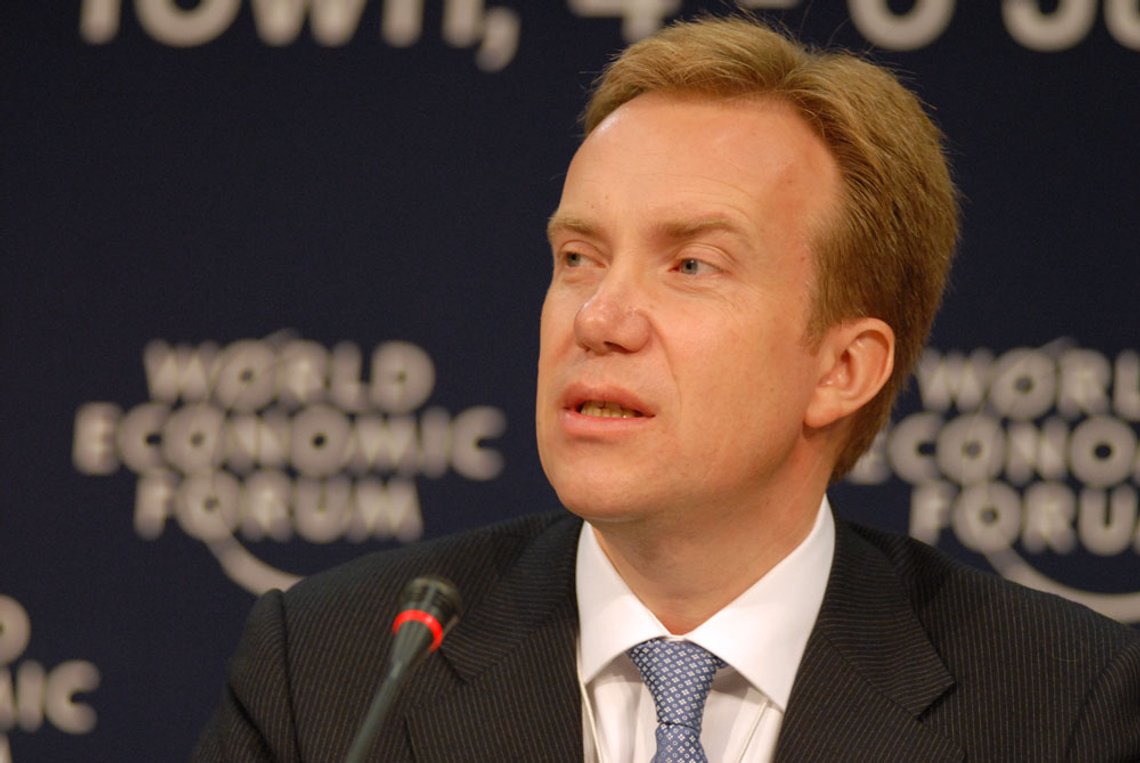


New documents reveal that the financier Jeffrey Epstein, convicted of sexual abuse, had direct contact with Børge Brende concerning the future of the Trilateral Commission.
In an email exchange from 2018, the two discussed how international bodies ought to be organised, writes Klassekampen.
In September 2018, Jeffrey Epstein sent an email to the Davos chief Børge Brende urging him to bring the Trilateral Commission into the twenty-first century. The Commission is a little-known network in which business leaders and politicians from North America, Europe, and Asia meet to discuss global issues.
In the same correspondence, Epstein wrote that the UN should be replaced by a forum such as the World Economic Forum, which Brende leads. Brende responded affirmatively to this initiative. When Epstein followed up with the call to modernise the Trilateral Commission, Brende replied with a smiley face and asked Epstein to trust him.
Donated millions to the Commission
The Trilateral Commission was established in 1973 by the financier David Rockefeller in order to secure stability through cooperation between businesspeople and politicians. Jeffrey Epstein himself was a member of the Commission for a number of years. Investigations indicate that he was a member between 1995 and 2008.
Epstein used his membership actively to build networks and legitimacy. In the 1990s, he donated between one and two and a half million kroner to the organisation. Also after he in 2008 was convicted of having purchased sex from minors, he continued to use the Commission as part of his strategy to restore his reputation. PR advisers recommended that he participate in the gatherings in order to display his position among the international elite.
Norwegian leaders and taxpayers’ money
Norway has been represented in the Commission since its inception. Today, the Norwegian delegation consists of prominent names such as Idar Kreutzer, former Conservative Party (Høyre) Minister Anniken Hauglie, Harald Solberg, and the diplomat Christian Syse. The leader of the Liberal Party (Venstre), Guri Melby, participated as a guest at a conference in Vienna last autumn.
The Ministry of Foreign Affairs (Utenriksdepartementet) has for several years supported the organisation financially by paying the membership fees for Norwegian participants. Between 2009 and 2014, the Ministry disbursed approximately 1.3 million kroner at today’s exchange rate in order to secure Norwegian participation.
Christian Syse, who has been the Ministry of Foreign Affairs’ Special Representative for Ukraine, defends the participation. He describes the Commission as a useful forum for seeking personal contacts and information that is of benefit to the service. He rejects that there is anything conspiratorial about the network, even though many theories about it exist.
Closed to the public
The meetings of the Trilateral Commission follow the so-called Chatham House Rule. This means that participants may use the information they receive, but that it is not permitted to disclose who has said what. This secrecy has led to criticism from researchers.
The historian Dino Knudsen at Malmö University believes that the network functions as an informal elite diplomacy with political influence. He points out that it is democratically problematic that elected representatives and decision-makers meet in closed rooms, without the public being given insight into what is being said.
The leader of the Liberal Party (Venstre), Guri Melby, says that she participated as a politician and party leader. She believes that there is little exercise of power in merely attending a meeting, but emphasises that it becomes a problem if matters are fixed behind closed doors, without people being aware of it.
The next meeting of the exclusive club will take place in Tokyo in May. There, the global elite will once again gather to discuss the world’s problems behind closed doors.


