

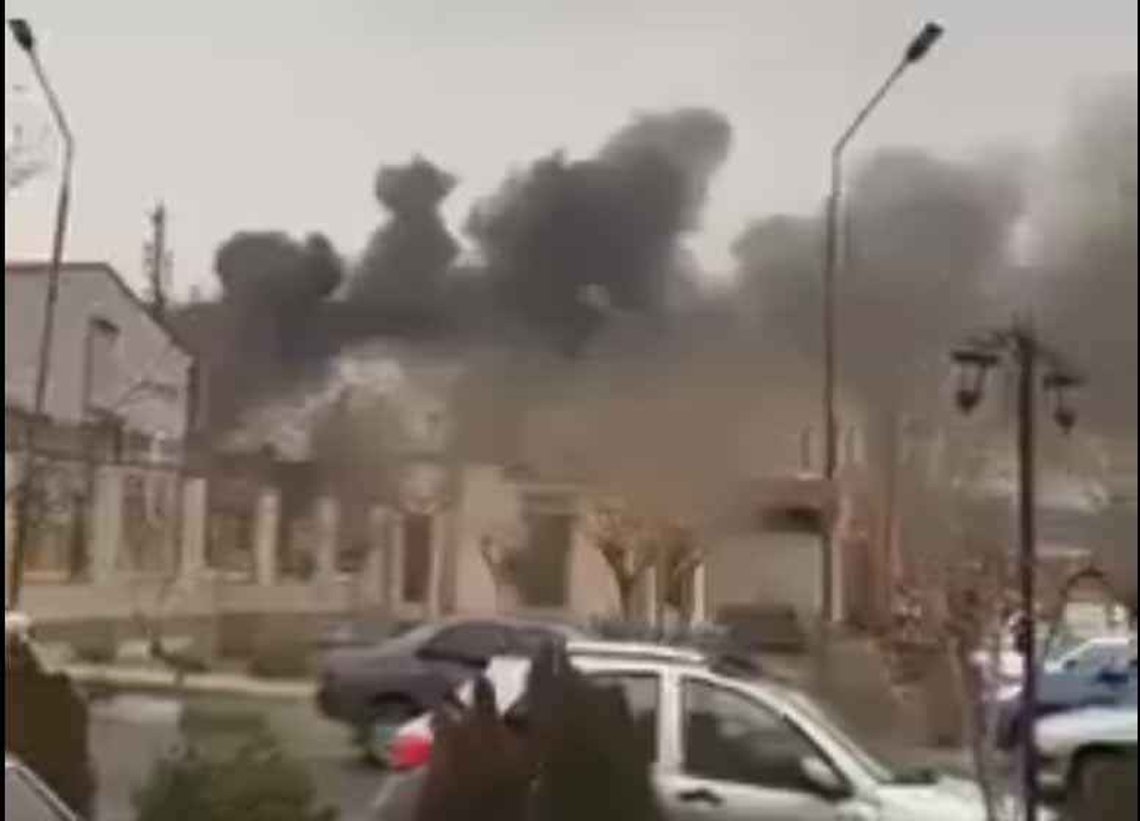
Iran has experienced a striking number of fires since anti-regime demonstrations began at the end of December – and the pattern, military/industrial targets, means they are viewed with suspicion. The regime explains them as accidents, gas leaks, short circuits and other technical faults, but in a tense geopolitical situation, speculation and rumours of sabotage have arisen.
A striking number of fires in military/industrial facilities
According to the Iranian authorities, it is a fire in a cooling tower that is out of service. They deny rumours of explosions. The fire has been extinguished and there are no reports of injuries or power outages.
Videos of the black smoke quickly spread on social media, including the normally reliable Tousi TV. Several accounts describe the incident as explosions. State media deny this, emphasising that it was a technical fault or waste that caught fire.
pic.twitter.com/svyK6Sl5NE 🚨Breaking: Explosion at the Alstom Star Khaneh power plant in Tehran.
— Aussie Persian 🇦🇺🇮🇷 – אוסי פרסי آسی پرسی (@Aussie_Persian) February 10, 2026
Dozens of cases have been reported from oil refineries, power plants, factories, markets and military facilities. Some have resulted in fatalities.
- On 6 February, a fire broke out in a carpentry workshop at a military base in eastern Tehran. The smoke was visible all over the city. Officially, the fire was explained as an electrical fault caused by a carpenter forgetting a power socket.
- Fires in markets in Tehran, some of which caused large flames and a lot of smoke, as well as explosions in cities such as Karaj, Parand, Bandar Abbas, have been explained as gas leaks or technical faults.
- A number of online sources have denied that the explosion in Bandar Abbas, which hit one of Iran’s most important and secretive surveillance centres, could have been caused by a gas leak. The building was reportedly not connected to the gas network.


