

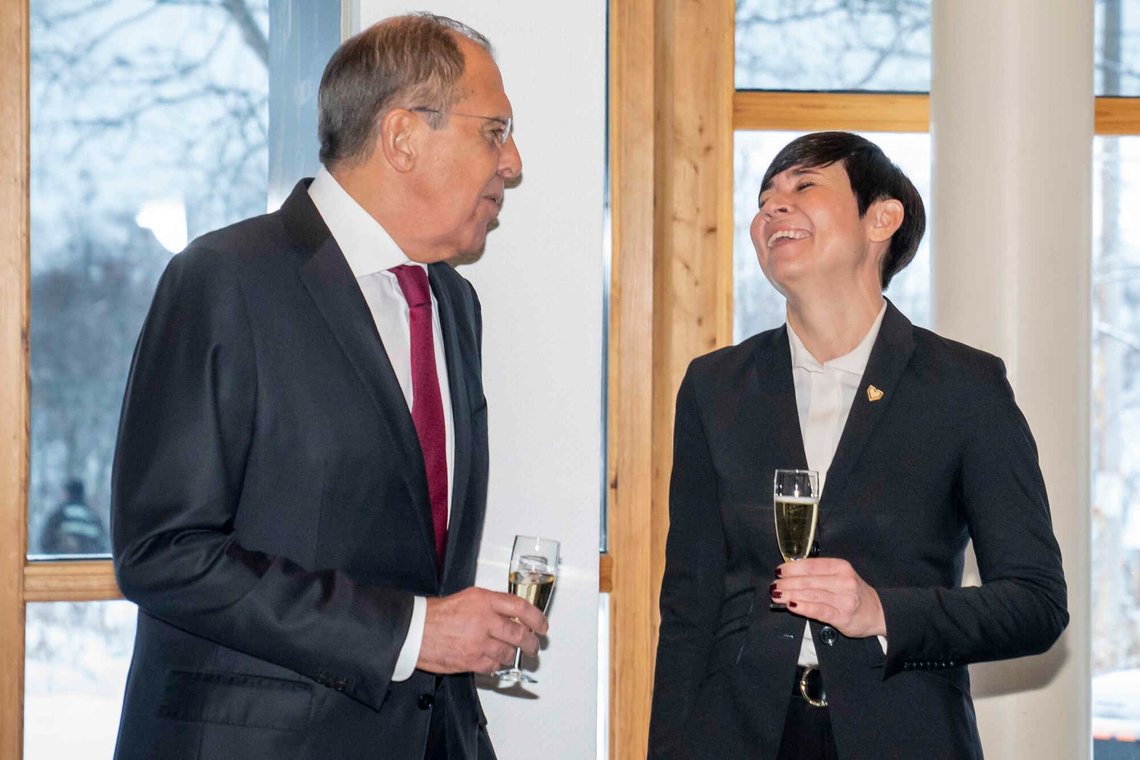


It’s almost touching to read the Facebook post from the incoming Conservative Party leader Ine Eriksen Søreide, in which she rails against the revelations in the Epstein case.
She is shocked and angry about the picture now being painted of an elite club that uses its positions for personal gain. These are strong words from a woman who, not long ago, appeared on nationwide television and ridiculed Bjørnar Moxnes, ex-leader of the far-left Red Party, when he claimed that Norway has a power elite living far removed from ordinary people. Back then, she dismissed outright the idea that there exists a separate class of politicians who do as they please with the public’s trust.
Now, reality has caught up with her rhetoric in a way that’s almost parodic. At the same time as she demands that all cards be laid on the table in the Ministry of Foreign Affairs and among her party colleagues, she herself has to eat humble pie and apologise for her own selective memory. It turns out that the future prime ministerial candidate has held significant international board positions in the Swiss organisation Centre for Humanitarian Dialogue and the international think tank International Crisis Group, without informing the Storting about them.
It’s convenient that this oversight was discovered and apologised for just before she’s due to be elected leader at the national conference.
This is precisely the global elite that Moxnes spoke of, and which Søreide claimed was fabricated. When a top Norwegian politician forgets that she sits on the boards of organisations in Geneva and Brussels, it tells us that she wears so many hats that she no longer knows which one is on her head. It confirms that the distance between these international cocktail circuits and the ordinary Norwegian has grown so vast that Søreide doesn’t even see the problem with keeping such positions hidden from voters.
In her post, Søreide tries to distance herself from the toxic culture surrounding the Epstein network by pointing out that it damages trust in the political system. She’s absolutely right in that analysis, but she fails to see that she herself is part of the problem. She admits that she declared herself conflicted in relation to her friend Mona Juul in 2017, but at the same time tries to downplay the friendship by saying they have only had the occasional dinner together.
Either one is conflicted because one is close friends, or one isn’t.
This close intertwining of friendships and positions of power is exactly what characterises the elite whose existence she denied.
Søreide now demands a full investigation of the Ministry of Foreign Affairs and her former colleagues. It rings extraordinarily hollow coming from a woman who, in the same breath, has to admit that she herself has messed up transparency around her own international ties. She is part of precisely the same ecosystem that she is now criticising. It’s the same mingling events and the same conferences where the line between politics and personal gain is blurred.
Ine Eriksen Søreide tried to lecture us that there is no elite in Norway. The truth is that she embodies it – an elite that believes the rules are for others, and that forgets its own obligations when it suits them. Her being shocked by the Epstein revelations now comes across as a desperate attempt to save her own skin by pointing fingers at others. It helps little to be angry about a toxic culture that one has oneself helped protect by denying it even exists.
Moxnes was right in his description of the Norwegian power elite, and Søreide has now, through her own actions, provided the final proof.


