

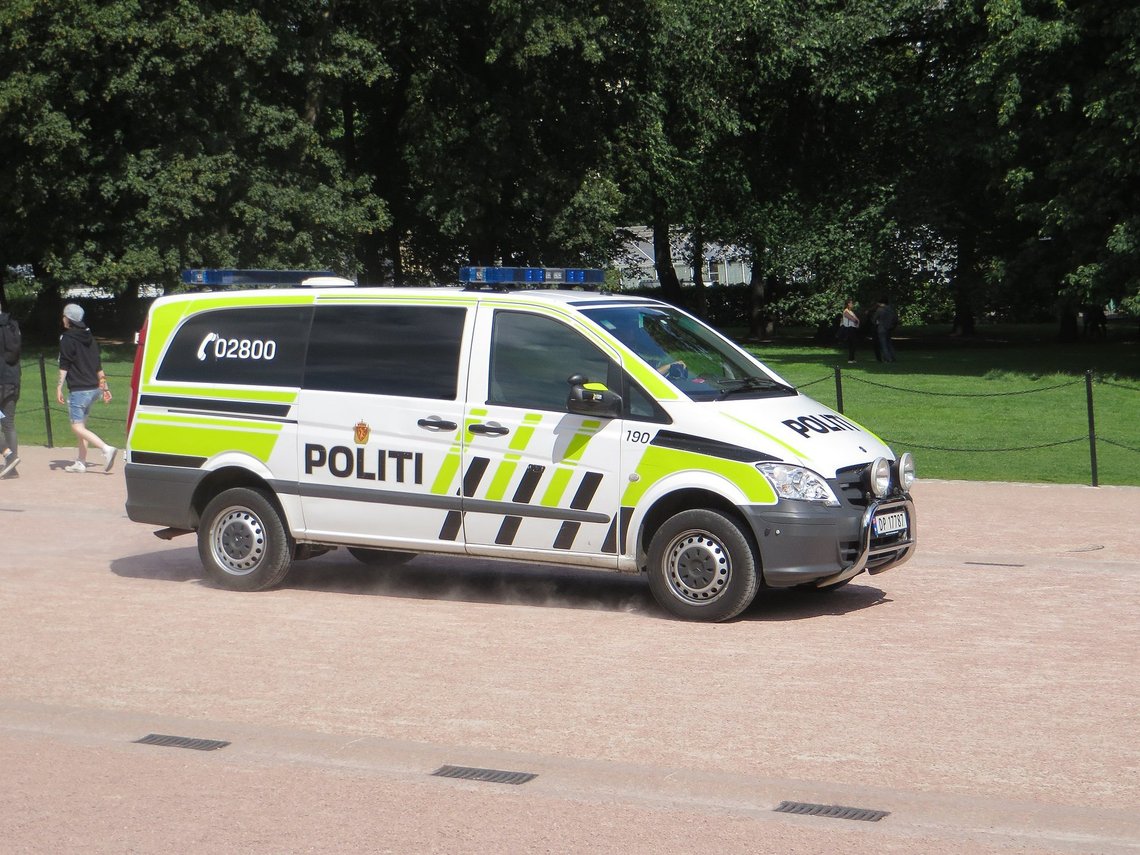


The police in Romerike are warning that children as young as twelve are being coerced into criminal networks through fabricated debts and threats.
Criminals use social media, amongst other things, to make contact with young people, writes Romerikes Blad. Simen Martinsen, head of the prevention unit at Ullensaker police station, believes that criminal networks act in a highly cynical manner.
– “They get children and young people into debt for a few hundred kroner, and then they’re off,” he tells RB.
The buying and selling of e-cigarettes is often used as a means to an end.
– For example, they ask young people if they can sell some e-cigarettes in exchange for a bit of money for the job. Once the young person has done this, the networks change the terms of the agreement. Suddenly, without warning, they claim that the young person owes them 300 or 400 kroner. The debt may be entirely fictitious.
The young person is then pressured into carrying out criminal tasks. Those who refuse are subjected to threats that may involve their entire family. In some cases, the situation escalates to the point where the young person flees.
– “There have been cases where children have ended up being moved far away from their local community as a way of escaping. This illustrates just how far things can go,” says Martinsen.
The SLT coordinator in Lillestrøm municipality, Gry Løge Lid, is very familiar with the issue, and says that the municipality has informed parents about the challenges posed by criminal networks.
– Among other things, an information leaflet has been produced regarding concerns about recruitment into crime, which has been distributed to parents at the municipality’s secondary school. The issue has also been raised at parents’ evenings and meetings with the Parents’ and Guardians’ Association.
60 networks
The Eastern Police District has identified around 60 networks that either operate in the district or have members residing in the district. Several of the networks have links to other geographical areas, including Oslo, Sweden and Morocco.
The Chief of Police in Romerike, Øyvind Buraas, views these developments with concern.
– In Romerike, concerns raised by schools have led to investigations that have uncovered links to criminal networks in Sweden.
– We cannot share information about individual cases, but there are concerns relating to drugs and violence that have led to the police becoming involved.
Buraas gives six examples of warning signs that parents should respond to:
- Young people start using encrypted apps. Ask them why. What do they need to hide?
- They start speaking differently. New opinions, new values. Sometimes quite suddenly. Who are they listening to?
- They start lying more. Or avoid questions altogether.
- They make new friends. Especially older people or adults you’ve never met.
- They come home with new things. Clothes, phones, money – with no explanation of where it comes from.
- They withdraw from their normal life. They stop going to school and avoid their usual routines. They’re less interested in old friends and hobbies.


