

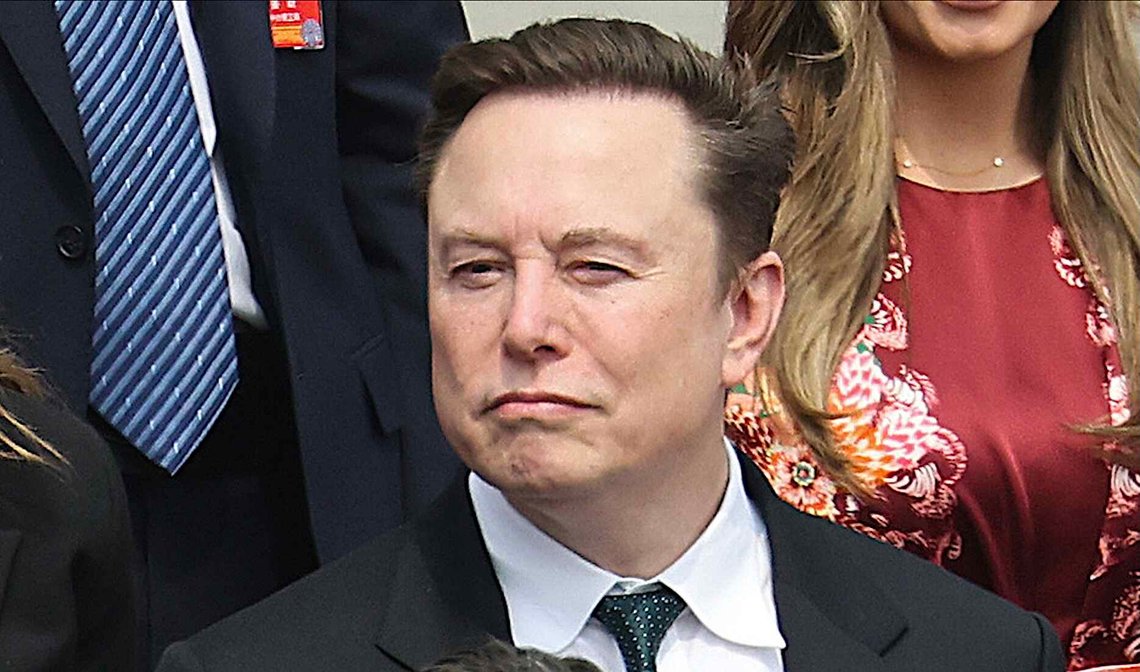


Elon Musk has invested nearly ten billion kroner in the US media group Skydance, which owns TVNorge, amongst other things. Norwegian media academics are sounding the alarm. Democracy may be under threat. It is perhaps worth recalling, at the same time, that three Norwegian media groups control nearly three-quarters of the total Norwegian newspaper circulation, and that the left is significantly over-represented both in Norwegian newsrooms and in parts of academia.
During a conference in New York on Wednesday last week, Skydance CEO David Ellison confirmed that Musk has become a shareholder in the company. On 6 October, Skydance completed its acquisition of Warner Bros. Discovery and is now one of the world’s largest media and entertainment groups. The company’s brands include CNN, CBS News, HBO, Paramount, Discovery, Eurosport and TVNorge. It is here, then, that Musk has bought shares. He has not taken over TVNorge. Nor is it known how much influence he will have over the group’s operations.
Ellison described Musk as the foremost entrepreneur of our time. Here in Norway, the enthusiasm is more measured.
– ‘A threat to democracy’, reads the headline in Finansavisen on Monday.
Jens Barland, professor of media management and communication at Kristiania University College, and Ole J. Mjøs, professor at the University of Bergen, warn against the growing concentration of media power in the hands of American tech billionaires.
“In Norway, we have a diversity of media outlets with democratic aims,” Barland tells Finansavisen.
The Norwegian media pond
The professors’ concerns have sparked some amusement on X.
“A threat to the media narrative is more accurate,” writes one user.
Geir Ugland Jacobsen from the Norwegian Democrats has also reacted, drawing attention to the existing concentration of power in the Norwegian media.
According to the Norwegian Media Authority, Amedia, Schibsted and Polaris Media controlled 74.5 per cent of the Norwegian newspaper circulation at the end of 2024, up from 73.1 per cent the previous year. Fewer and fewer Norwegian newspapers remain outside the major media groups. Nevertheless, the Norwegian Media Authority considers the diversity of publishers in Norway to be strong. In addition, of course, there is the state-owned and tax-funded public service broadcaster NRK. And in Klassekampen, a political party, Rødt, is the second-largest shareholder, with a 19.7 per cent stake. In other words, Norwegian democracy has long experience of both concentrated media power and political ownership. But how many different newspaper titles does one actually need to convey the same message? And how well is democracy served by a wide variety of media outlets if the diversity of opinion is modest? It would have been interesting to hear the professors’ views on this as well.
The wrong political stance?
The elephant in the room is, of course, Elon Musk’s political stance. The billionaire has backed Donald Trump and lent his support to parties on the European right. This makes him a controversial figure in the Norwegian media and academia – two professional circles where the left is significantly over-represented.
According to the 2026 Media Survey, 54 per cent of unionised journalists identify as being on the left, compared with just 19 per cent on the right. Eleven per cent would vote for Rødt, whilst four per cent would vote for the Progress Party.
In academia, we find a similar political bias. A study reported by Forskning.no in 2022 showed that Rødt, SV and MDG had a combined support of 60.4 per cent amongst researchers in the humanities, and 54.3 per cent amongst social science researchers, compared with 16.2 per cent of the general population in the 2021 parliamentary election. The Labour Party is not even included in these figures.
Against this backdrop, it is natural to ask whether an American billionaire with a different political stance would have provoked a similar outcry from these two bastions of the left. Surely our rock-solid democracy should be able to tolerate people on the right owning media shares too?
Frightening experiences with Twitter?
This is not the first time Musk’s investments have raised concerns for democracy. When the billionaire took over Twitter in 2022, that move was also met with warnings. But not everyone shares these concerns.
‘A threat? The bloke has made Twitter usable,’ writes another user in the comments section on X.
For many of those who want a freer public debate, the change of ownership represented an opportunity to challenge the established media and their portrayal of reality. The fact that these media outlets faced greater competition in setting the agenda was hardly a democratic loss in itself.
Ten billion – and four hours of criticism
Incidentally, a small detail from the US deserves attention: when Skydance boss David Ellison confirmed Musk’s investment, he was also asked about the upcoming screening of the documentary film ‘Musk’, directed by Alex Gibney. The four-hour-long, highly critical documentary has previously prompted Musk to threaten legal action. Ellison confirmed that the documentary will be shown on HBO Max, as planned.
In other words, Musk has invested nearly ten billion kroner in a media group which – as things stand – intends to devote four hours to criticising him. For the time being, it appears that democracy will survive this investment as well.


