

Fewer than a quarter of Britons under the age of 35 consider the willingness to ‘serve in the military when needed’ to be important.
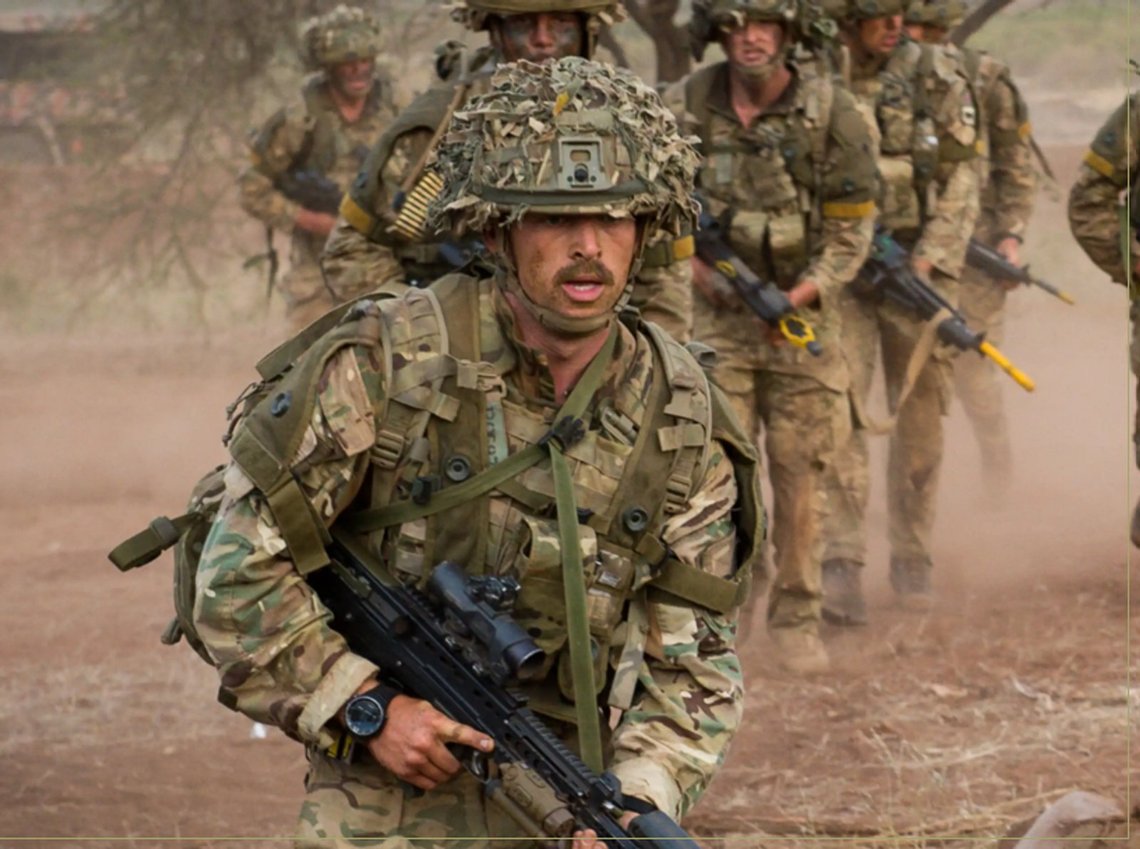
The latest edition of the ‘British Social Attitudes Survey’ (BSA), published on Wednesday, shows that only 22 per cent of respondents under the age of 35 attached great importance to the willingness to serve in the armed forces in a crisis situation. By comparison, 45 per cent of those aged 55 and over considered it very important to serve in the military, reports The Times.
Sophia Gaston, the report’s author, said the findings should be a cause for concern for the authorities, as younger people are needed to physically defend the nation should Britain find itself at war.
Gaston believes that one of the reasons for the lack of support for military service is that young Britons feel less connected to the country.
“I think some of this stems from the fact that we are living in an era of perceived generational unfairness. There are many young people who do not feel they have the same connection to the nation or its national institutions as older Britons do.
“This, in turn, affects their willingness to put themselves on the line and defend the nation.”
When it comes to who was considered the greatest threat to world peace, it comes as no surprise that Russia tops the list. 89 per cent of participants ticked the box for Russia. However, it is somewhat surprising that Israel comes in second place, ahead of Iran.
Just behind Iran, and well ahead of China, young Britons fear the US. The BSA survey shows that the proportion describing the US as a serious threat more than doubled from 36 per cent in 2024, when Joe Biden was in power, to 71 per cent last spring and then to 74 per cent this spring.
According to Gaston, this is partly due to President Donald Trump’s treatment of Ukrainian President Volodymyr Zelenskyy during the much-discussed meeting at the White House in February 2025, as well as the war in Iran. The media’s constant criticism of everything Trump does is also likely to be a factor.
Although few young Britons are willing to defend their country, general support for increasing defence spending is at a record high, having risen from 28 per cent in 2006 to 56 per cent this year. This follows a trend that began immediately after the attack on the World Trade Centre in 2001, according to Gaston.
“You can see that in every single one of these surveys there has been a gradual increase in the desire for higher defence spending. However, the government has not increased defence spending to the same extent, and that is why we have now reached this majority.”
In Norway, a survey carried out by Sentio for Universitas in February 2026 showed that only 12 per cent of students in Oslo were willing to fight for Norway.
• Military contribution: 30 per cent of men and 5 per cent of women state that they would fight in the military
• Civilian contribution: 45 per cent of women say they would contribute through civilian efforts (such as healthcare, emergency response or volunteering), whilst a total of around 40 per cent state they would provide various forms of civilian assistance
• Flight: 21 per cent state that they would have fled the country in the event of an invasion
By way of comparison, general population surveys, such as an InFact poll for Nettavisen from autumn 2026, show that approximately 40 per cent of the general population are willing to fight for Norway.