

Several foreign embassies have closed their doors for no apparent reason. Gay people are voicing their fears on social media that they will be sent to death camps if the right-wing opposition candidate wins. As usual, the presidential election in Brazil is surrounded by strong emotions.
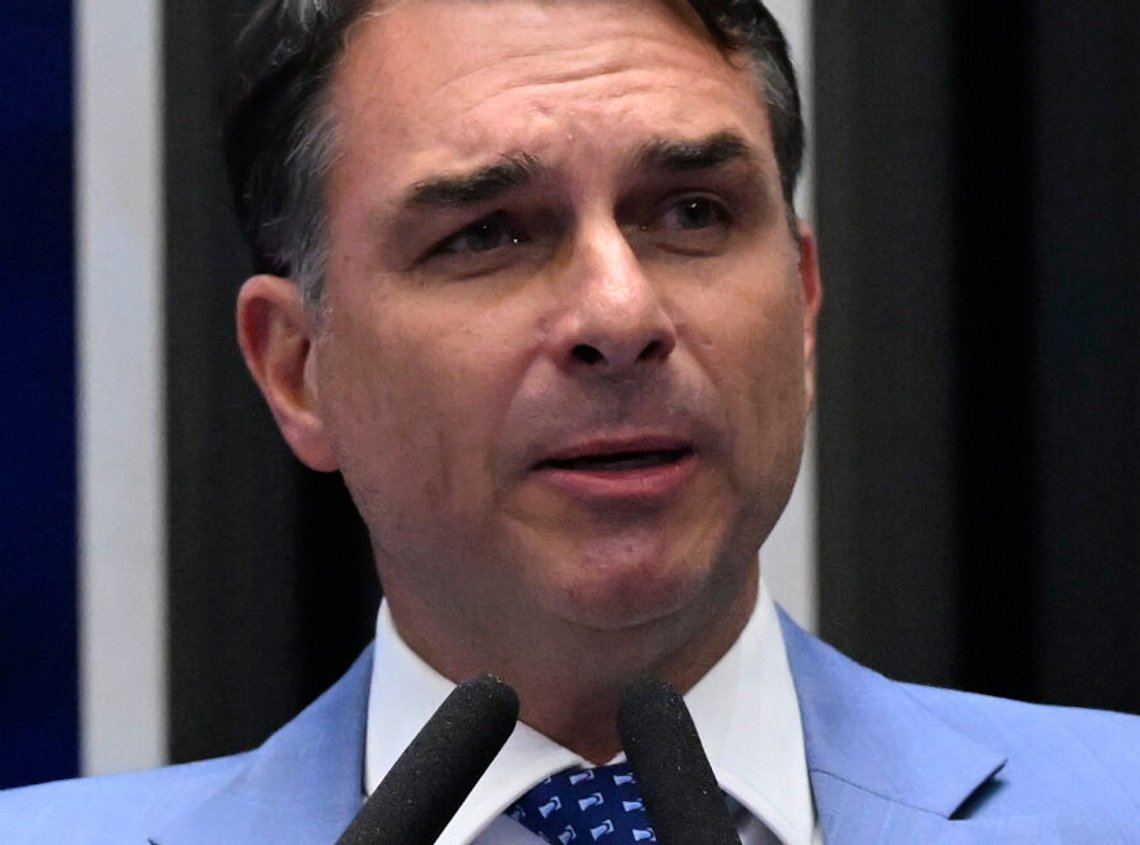
Flávio Bolsonaro (45), the eldest son of the convicted former president Jair Bolsonaro, cast his vote in Rio de Janeiro this morning. He said at the time that he was ready to lead the country and that he intends to ‘give Brazilian families back the right to have dreams’.
Bolsonaro junior has every reason to dream of triumph in today’s election. His father is under house arrest due to health problems and is barred from speaking publicly, after being sentenced to more than 27 years in prison in the wake of the previous presidential election in 2022.
He was found guilty of conspiring to attempt a military coup and of having knowledge of alleged plans to assassinate both Lula and Supreme Court President Alexandre de Moraes.
The electronic polling stations closed this evening at 9.00 pm, Norwegian time.
Today’s election also includes gubernatorial elections in Brazil’s 26 states. A sharp rise in crime in recent years under socialist governors – as seen, for example, in the state of Bahia – means that governors allied with the Bolsonaro family are expected to fare well.
– This is a very important day, on which I hope Brazilians will put an end to a period characterised by decline. A period in which public funds and public administration have been misused in an attempt to influence the elections. Lula’s friends have interfered in the elections, and this must be stopped. Brazil cannot endure another four years of this,” said Flávio Bolsonaro, according to the news website G1.
Minorities fear the worst
In line with the propaganda that the Brazilian right wing consists of genocidal who will exterminate minority groups as soon as they come to power, social media is awash with posts from the LGBTQ community, containing various messages about the extreme danger they will face if the incumbent president, Luiz Ignácio Silva da Lula, does not win the election again this year.
In 2021, a Senate committee attempted to indict Jair Bolsonaro for mass murder and genocide against the country’s indigenous peoples in connection with the COVID-19 pandemic. The charges were dropped in favour of ‘crimes against humanity’ and ‘charlatanism’, but never resulted in any actual indictment. ‘Bolsonaro genocida’ became a standard propaganda term for Jair Bolsonaro, yielding hundreds of thousands of indexed hits on Google.
The hashtag #BolsonaroGenocida was used in more than 100,000 unique tweets, according to a Brazilian study conducted after the pandemic.

– “Those of you who aren’t LGBT will never understand the fear of walking down the street without feeling safe, my voice goes beyond just politics; my voice is a struggle for resistance; my voice [is about] simply wanting to survive,” reads the text in this video, which was posted to mark the election of influencer Rick Oliveira. According to his own profile, he works in the advertising industry. (Still image from an Instagram post/@rickoliveirx)
Bolsonaro receives the most overseas votes
The votes in polling stations across Asia and the Middle East have been fully counted. Lula has the lead in the majority of the countries to which Brazilians have emigrated – specifically, 11 out of 18 countries that have fully counted.
However, in absolute terms, it is Flávio Bolsonaro who has received the most votes. In Japan alone, 24,600 people – over 71 per cent of the Brazilian diaspora – have voted for Bolsonaro. Bolsonaro is also leading in the United Arab Emirates, Qatar, Saudi Arabia, the Philippines, India, Taiwan and Thailand.
In total, nearly one million Brazilians are casting their votes outside Brazil’s borders.
In the latest opinion polls, Lula has held a narrow lead, within the 2 per cent margin of error. This means a second round of voting on 25 October is likely. The two leading pollsters have issued forecasts predicting different winners, and there is therefore no clear picture of what the final result might be.
Embassies closed
The US and Australian embassies in Brasília closed their doors on Friday for security reasons and issued warnings to their citizens about an alleged high-risk situation in Brazil due to the election. The Americans claimed that threats had been received against the embassy, and the federal police were on the trail of two individuals allegedly behind them. This afternoon, the police then issued a statement denied that the security concerns regarding the embassies were unfounded.
Canada and Ireland have not closed their embassies, but advise their citizens to exercise extreme caution. The UK and Germany have issued similar warnings about possible demonstrations and clashes across Brazil.
Support from Israel
Flavio Bolsonaro, like other right-wing candidates in Latin America who have gained ground (Milei, De La Espriella), has received support from Israel’s Prime Minister Benjamin Netanyahu and recently visited Jerusalem. The fact that Netanyahu has referred to Bolsonaro Jr as a friend is viewed with great suspicion by political commentators sympathetic to Lula, who consequently link the presidential candidate to a ‘far-right axis’ between Donald Trump – the big, bad wolf – on the one hand, and what the commentators regard as a genocide for which Netanyahu is responsible in the Palestinian autonomous territories on the other.
The international press considers the election to be extremely important for Brazil’s future, for diametrically opposed reasons. Extremely important both for the remnants of the continent’s ailing socialism and also for Trump’s ‘far-right’ alliances from the border fence and southwards.
The New York Times more than suggests that Trump is attempting to influence the election result to secure yet another ally in South America, where Brazil now represents one of the last remaining left-wing governments.
But this narrative, too, must surely be regarded as political propaganda, given that Brazil’s own supreme electoral body, Tribunal Superior Eleitoral (TSE) (which is not exactly known for being particularly right-wing), rejects the notion that there is any evidence of foreign interference.
The TSE makes this statement despite the fact that Lula has specifically asked them to include the alleged threats against the US embassy in the investigation.


